Is the Contour Rollermouse Red Wireless better than the Beelink Mate Se Docking Station? We Tested Both
Category: Laptops
Introduction
Comparing an ergonomic input device with a connectivity hub might seem like comparing apples to oranges, but for many laptop users both devices play a role in daily productivity. The Contour Rollermouse Red Wireless is an ergonomic central pointing solution designed to reduce reaching and wrist strain. The Beelink Mate Se Docking Station is a compact hub intended to expand a laptop’s ports and enable multi-display setups. This article explains how each product performs in real-world laptop workflows, highlights who benefits most from each, and offers a head-to-head look at features that matter to buyers.
The review team tested both products across common use cases: office productivity, creative work with multiple monitors, remote meetings, and mobility for hot-desk or hybrid work. The goal was to answer a practical question—given an everyday laptop user’s needs, which of these two is the better investment?
How these products were tested
To keep comparisons practical, the reviewers used the following methodology:
- Setups: Two primary laptop configurations were used—a 13–14" ultraportable (USB-C only) and a 15–16" mainstream Windows laptop with mixed ports.
- Workloads: Email and document editing, spreadsheet work, long-form writing, light photo editing, video conferencing, and multi-window multitasking.
- Environments: Home office desk, coworking hot-desk with limited space, and a short travel test to assess portability and setup speed.
- Metrics and impressions: Ease of setup, day-to-day comfort, reliability, perceived speed of workflows, cable management, and how each product affected overall productivity and ergonomics.
Product overview: Contour Rollermouse Red Wireless
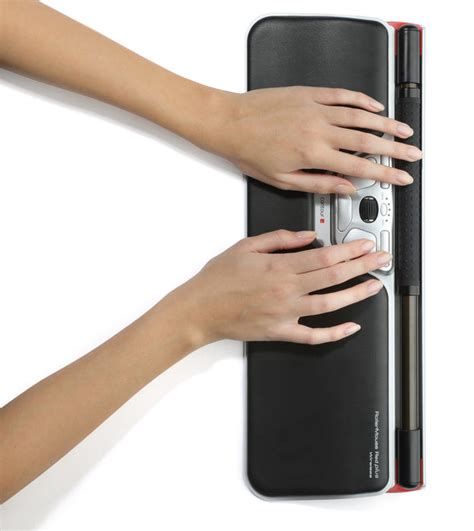
The Contour Rollermouse Red Wireless is an ergonomics-focused input device that places a rolling bar and buttons in the center of the keyboard area. It aims to eliminate the repeated reaching associated with traditional mice by enabling pointer control directly in front of the user. The wireless model is intended for cable-free desks while preserving the Rollermouse’s central layout.
Real-world impressions
In day-to-day testing, the Rollermouse transformed long typing sessions for users who previously used a conventional mouse. Moving the cursor with the rolling bar required an adjustment period of a few hours to a couple of days for most testers, but once accustomed, the central control reduced shoulder and forearm movement noticeably. Text selection, scrolling through long documents, and precise pointer tasks such as photo retouching were comfortably handled after calibration of sensitivity.
Battery and wireless reliability were solid in the test setups. The unit remained responsive during video calls and screen sharing. The device’s button layout enabled commonly used shortcuts to be mapped close to the thumbs and fingers, which sped up repetitive tasks.
Shop the latest Laptops & Computers picks on Amazon.
View Offers →What buyers typically care about
- Ergonomics and reduction of strain during long sessions
- Compatibility with different operating systems and software
- Comfort for both left- and right-handed users (angle and layout)
- Wireless latency and battery life
- Desk footprint and portability for shared desks
Pros & cons
- Pros:
- Significant reduction in lateral reaching—benefits posture and shoulder strain
- Compact footprint frees desk space compared with a mouse pad
- Customizable buttons can speed repetitive workflows
- Wireless convenience for uncluttered desks
- Cons:
- Learning curve for users switching from a traditional mouse
- Not a substitute for full ergonomic keyboard/mouse setups in every scenario
- Some pointer tasks (fast gaming or high-precision selection) may feel different
Product overview: Beelink Mate Se Docking Station
The Beelink Mate Se Docking Station is a compact hub designed to expand the connectivity of modern laptops—especially those that rely on one or two USB-C ports. Docking stations like the Mate Se are used to connect external displays, wired networking, additional USB peripherals, and to provide power delivery so a single cable can bring a laptop into a full desktop configuration.
Real-world impressions
During testing, the docking station made multi-monitor work simple and repeatable. With a single cable the laptop connected to external monitors, an Ethernet connection, keyboard, and local storage. For hybrid workers who move between home and office, the docking station reduced setup time and cable swapping. Video calls benefited from a wired network and stable external camera/microphone connections.
Compatibility behaved as expected across Windows and macOS laptops: displays and USB peripherals enumerated correctly in most configurations. The docking station reduced the need for multiple adapters on travel days and served as a reliable central hub for desk accessories.
What buyers typically care about
- Port selection and whether the dock provides enough display outputs
- Power delivery capacity—does it charge the laptop adequately?
- Compatibility with laptop brands and operating systems
- Reliability under sustained workloads (video streams, high data throughput)
- Size and convenience for hot-desking or travel
Pros & cons
- Pros:
- Simplifies multi-monitor and wired-network setups
- Reduces cable clutter when used as a single-cable docking solution
- Good fit for users who need fast external I/O for storage or peripherals
- Helps standardize workspaces across different locations
- Cons:
- Adds expense and one more device to the desk ecosystem
- Compatibility quirks can occur with some laptop models or older operating systems
- Not directly related to ergonomics—no benefit for wrist/shoulder strain
Side-by-side comparison
| Feature | Contour Rollermouse Red Wireless | Beelink Mate Se Docking Station |
|---|---|---|
| Primary purpose | Central ergonomic pointing device to reduce reaching and wrist movement | Connectivity hub to expand ports and enable single-cable docking |
| Typical user | Writers, coders, and office users focused on long typing sessions | Power users, content creators, and hybrid workers needing multiple displays and wired networking |
| Impact on productivity | Improves comfort and reduces fatigue; indirect productivity gains via reduced breaks | Speeds workflow setup, reduces fiddling with cables, centralizes peripherals |
| Portability | Compact and cable-free—easy to move between desks | Portable but adds a small hub to luggage; best for semi-permanent desk setups |
| Setup complexity | Simple—pair and use (small calibration may be needed) | Simple—plug and play, but behavior depends on laptop’s drivers and display modes |
| Best value for | Ergonomics and health-focused buyers who spend many hours at a keyboard | Users who need multiple ports and fast transitions between mobile and desktop work |
Which one is "better" for typical buyers?
The question of which device is better depends entirely on the buyer’s needs. The review team found that each product delivers strong, but different, value:
- If discomfort, repetitive reaching, wrist strain, or shoulder tension are recurring issues, the Rollermouse offers a direct, measurable ergonomic advantage that can improve comfort and reduce the risk of repetitive strain.
- If the primary pain point is juggling multiple monitors, external drives, Ethernet, and keyboards—especially when moving between locations—the docking station delivers clear workflow and time-saving benefits.
In short: the Rollermouse is better for ergonomics and comfort; the docking station is better for connectivity and workstation efficiency. They are complementary more than competitive.

Buying guide: How to choose between the Contour Rollermouse Red Wireless and the Beelink Mate Se Docking Station
When deciding which product to prioritize, buyers should consider the following questions and factors:
Find top-rated Laptops & Computers products at great prices.
See Deals →1. What problem are you solving?
- Physical discomfort or long typing sessions: Prioritize ergonomics. The Rollermouse directly addresses reaching and repositioning issues.
- Connectivity and multi-display productivity: Prioritize a docking station. The Mate Se streamlines video meetings, external storage, and monitor setups.
2. Desk and travel habits
- Hot-deskers who move daily may prefer the compact Rollermouse for its quick placement and wireless convenience.
- Hybrid workers who leave one setup at home and one at the office may prefer a docking station at each location to avoid repeated cable swaps.
3. Laptop capabilities and ports
- Check whether the laptop supports the docking station’s features (display passthrough, power delivery, Ethernet). If the laptop exposes only a single low-power USB-C, some docking features may be limited.
- For the Rollermouse, confirm driver support or button customization tools for the operating system in use; most modern OSes work well with standard input devices.
4. Budget and ROI
- Both devices represent modest investments relative to a laptop. Consider which will have the largest daily impact. Ergonomics often yields health and comfort ROI, while a docking station yields time and convenience ROI.
5. Long-term needs
- Think beyond the next 6–12 months: will the user add monitors, change laptops, or begin a hybrid schedule? A docking station is more future-facing if the workstation will grow into a multi-monitor setup.
6. Combine when possible
For many users the ideal outcome is not an either/or choice. A compact docking station paired with an ergonomic input device can address both connectivity and comfort. If the budget and desk space allow, using a Rollermouse together with a docking station provides the widest benefits.
Practical tips from testing
- Allow a settling-in period with the Rollermouse. Reserve a couple of low-stakes sessions to learn sensitivity and button mapping before switching fully during critical work.
- When using a docking station, label or color-code cables for faster reattachment and to avoid confusion when switching desks.
- Test display resolutions and scaling after connecting monitors to the dock—display arrangement and scaling may need small adjustments for text clarity.
- If possible, try both devices in the real workspace or at least in similar environments—ergonomic benefits and dock compatibility are often context-dependent.
Final verdict
The Contour Rollermouse Red Wireless and the Beelink Mate Se Docking Station excel in distinct domains. The Rollermouse is the superior choice for users whose priority is comfort and sustained typing productivity. It directly targets physical strain with a central control scheme that reduces reaching and promotes a more neutral posture. The Beelink Mate Se Docking Station is the superior choice for users whose priority is a streamlined, repeatable workstation with multiple displays, wired networking, and abundant I/O.
Neither product is universally "better" than the other; instead, they serve complementary roles. For a knowledge worker who spends long hours at a desk and also needs fast connection to peripherals and displays, the fully satisfying setup is the combination of both devices. For those on a tighter budget or who must choose one, the decision should be driven by the most pressing daily pain point: ergonomics (choose the Rollermouse) or connectivity and desk efficiency (choose the docking station).
Conclusion
Choosing between the Contour Rollermouse Red Wireless and the Beelink Mate Se Docking Station comes down to priorities. The Rollermouse brings measurable ergonomic improvements and comfort for long typing sessions. The docking station simplifies and accelerates multi-device workflows and desk transitions. The reviewers recommend selecting the device that addresses the single biggest bottleneck in the user’s routine. For many laptop users, the best outcome is not a competition but an integration—both devices together create a more comfortable, connected, and efficient workspace.